
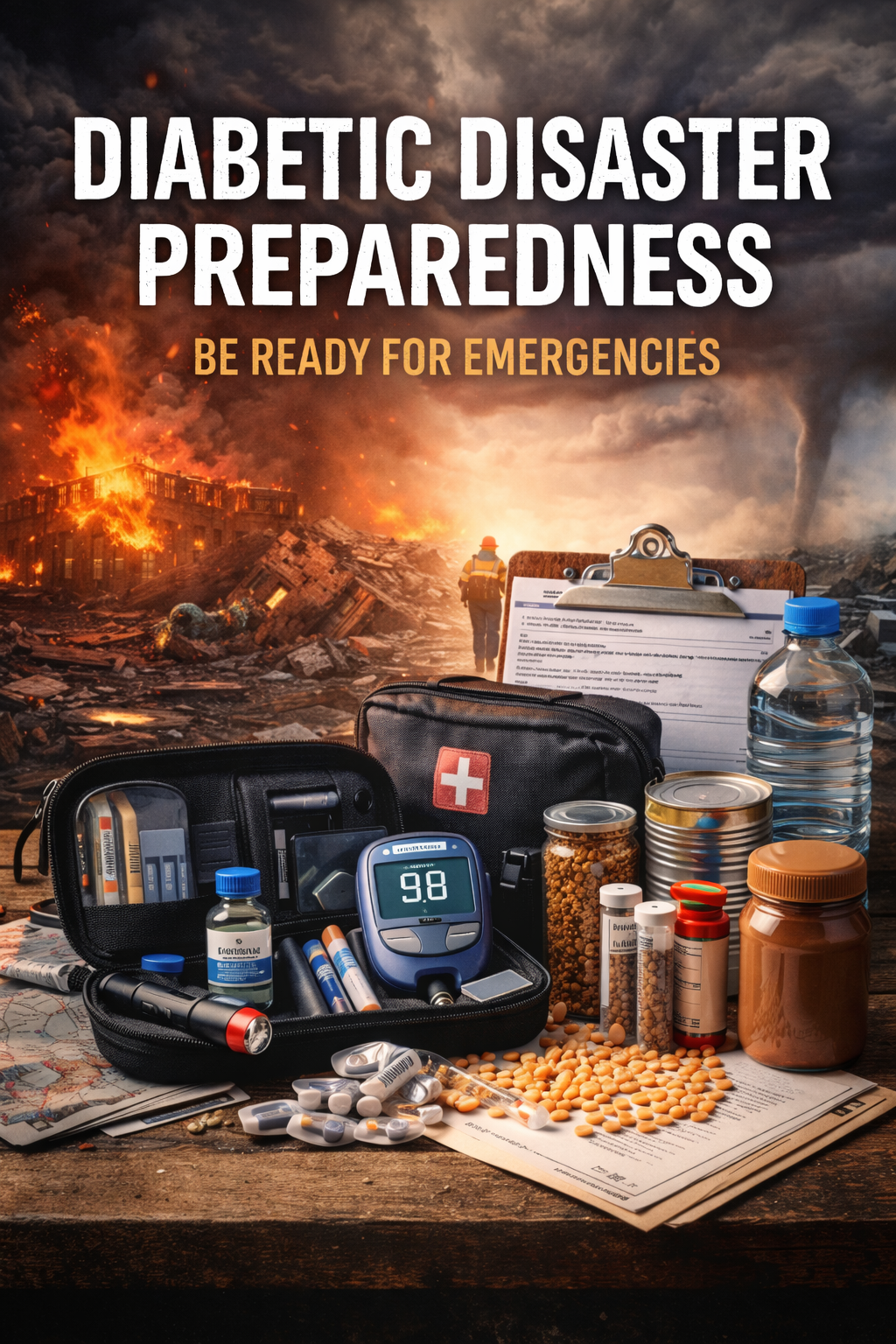
Disasters do not pause chronic illnesses. Hurricanes, floods, winter storms, blackouts, and evacuations can instantly disrupt routines that people with diabetes rely on every day. When power is out, pharmacies are closed, and help is delayed, preparedness becomes the difference between stability and a medical emergency.
The first 72 hours after a disaster are the most critical. During this window, families are often on their own, utilities may be down, and access to medical care is uncertain. For individuals living with diabetes, advance planning is not optional—it is survival.
Why People With Diabetes Must Prepare Differently
Diabetes management depends on:
- Regular meals
- Timed medication or insulin
- Blood glucose monitoring
- Proper food and hydration
- Temperature control for supplies
Disasters disrupt all of these at once. Stress hormones alone can raise blood sugar levels, while missed meals, heavy physical labor, and dehydration can quickly cause dangerous lows. Preparation reduces chaos and gives you control when everything else is uncertain.
The Diabetes Disaster Kit: Medical Essentials
Every person with diabetes should maintain a dedicated disaster medical kit separate from everyday supplies. Plan for at least two weeks, not just three days.
Critical Medical Supplies
- Copies of emergency medical information and prescriptions
- Insulin or diabetes medications (including over-the-counter meds you use daily)
- Syringes, pen needles, or insulin pump supplies
- Blood glucose meter and extra test strips
- Lancets and lancing device
- Urine ketone testing strips
- Alcohol swabs and cotton balls
- Blood sugar log or notebook
- Glucagon emergency kit (if insulin-dependent)
- Fast-acting carbohydrates (glucose tablets, juice)
- Longer-lasting carbohydrates (crackers, cheese)
- Hard plastic container for sharps disposal
Supplies should be checked every 2–3 months and replaced before expiration dates.
Insulin Storage When Power Is Out
Refrigeration loss is a common concern—but insulin remains usable longer than many people realize.
- Insulin can be stored at room temperature (59–86°F) for up to 28 days
- Insulin should never be exposed to extreme heat, freezing temperatures, or direct sunlight
- Clear insulins should remain clear; cloudy insulins should be evenly mixed
- Insulin that clumps or sticks to the vial should not be used
In true survival conditions, syringe reuse may become necessary—but syringes should never be shared
Food Storage for Diabetics During Emergencies
Food availability may be limited, delayed, or contaminated during disasters. Diabetics must plan food storage carefully to maintain blood sugar control.
Recommended Emergency Foods
- Crackers or unsweetened dry cereal
- Peanut butter
- Canned tuna, chicken, or salmon
- Nuts
- Powdered or shelf-stable milk
- Cheese and crackers
- Canned fruit packed in water or light syrup
- Regular and diet soda (for blood sugar management)
- Fruit juice
- Glucose tablets or hard candy
- One gallon of water per person per day (minimum)
Avoid foods high in refined sugars and greasy fried items. Read labels carefully and limit ingredients such as corn syrup, sucrose, honey, and molasses.
Blood Sugar Control Under Disaster Stress
Disasters change physical and emotional demands. Keep these risks in mind:
- Stress raises blood sugar
- Missed meals cause dangerous lows
- Heavy labor without snacks lowers blood sugar
- Excess exercise when blood sugar is over 250 mg/dL can increase levels further
Monitor blood glucose more frequently than normal and record readings. Wear diabetes identification at all times, especially during evacuations or rescue operations.
Foot Care and Injury Prevention
Debris, flooding, heat, and damp conditions greatly increase infection risk.
- Wear sturdy shoes at all times
- Never walk barefoot
- Inspect feet daily for cuts, blisters, or irritation
- Keep feet dry whenever possible
- Seek care early for signs of infection
Minor injuries can become major complications when blood sugar is uncontrolled.
Sick-Day Rules During Disasters
Illness during a disaster is especially dangerous for diabetics.
Key rules:
- Never stop insulin unless instructed by a doctor
- Continue medications even if eating less
- Stay hydrated—dehydration worsens blood sugar control
- Test blood sugar frequently
- Test for ketones if blood sugar exceeds 240 mg/dL
- Eat carbohydrates even if solid food is not tolerated
Seek medical help if ketones are moderate or high, vomiting persists, or blood sugar remains elevated for two days
When to Seek Emergency Help
If you:
- Run out of insulin or medications
- Cannot keep fluids down
- Have persistent high blood sugar or ketones
- Cannot reach your doctor
Go immediately to:
- The nearest hospital
- An emergency medical center
- The American Red Cross
- Local emergency services or police
Do not delay care during disasters—early treatment saves lives.
Final Thoughts: Preparedness Is Medical Self-Defense
Disaster preparedness for diabetics is not fear-driven—it is responsibility-driven. With the right planning, supplies, and knowledge, people with diabetes can remain stable, independent, and safe even when systems fail.
Preparation turns uncertainty into confidence—and in emergencies, confidence saves lives.