
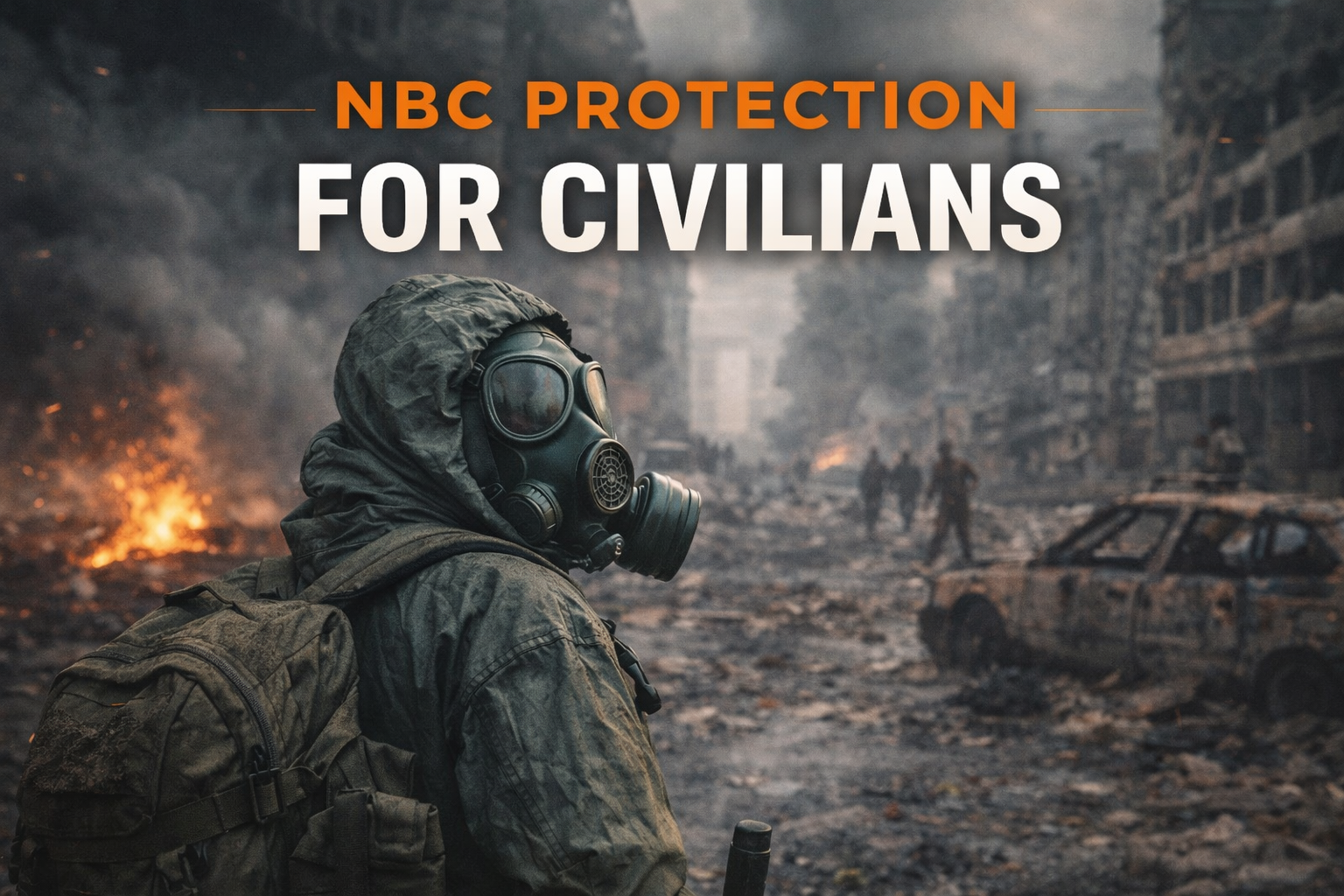
Most people assume nuclear, biological, and chemical (NBC) threats belong strictly to the battlefield. History—and recent global events—prove otherwise. Industrial accidents, terrorism, pandemics, radiological releases, and chemical spills can expose civilians to the same hazards military forces train to survive.
Preparedness for NBC events is not about fear—it is about understanding protection, avoidance, and recovery before panic sets in.
The Three Fundamentals of NBC Survival
Military doctrine breaks NBC defense into three simple fundamentals that translate directly to civilian survival:
Avoidance
The best defense is not being exposed at all. Avoidance means:
Recognizing warning signs early Staying upwind and uphill when possible Limiting movement through contaminated areas Using distance, barriers, and shelter to reduce exposure
Most civilian casualties occur because people do not recognize danger until it is too late.
Protection
Protection focuses on reducing exposure when avoidance fails. For civilians, this includes:
Respiratory protection (masks, filters) Skin protection (outer garments, gloves, footwear) Shelter-in-place strategies Sealing indoor environments against outside air.
The military emphasizes layered protection—no single item is enough by itself.
Decontamination
If exposure occurs, rapid decontamination saves lives. This means:
Removing contaminated clothing immediately Washing exposed skin with water and mild soap Isolating contaminated items Preventing secondary exposure to others
The manual stresses that speed matters more than perfection when decontaminating.
Understanding the Threats
Chemical Hazards
Chemical agents can be industrial (chlorine, ammonia) or weaponized. They may appear as vapors, aerosols, or liquids. Many are absorbed through skin, not just inhalation.
Key civilian takeaway:
Wind direction matters Sealed interiors reduce exposure Improvised skin barriers buy time, not immunity
Biological Hazards
Biological threats include toxins and infectious agents. Unlike chemicals, they may not cause immediate symptoms.
Civilian lessons:
Hygiene is protection Isolation slows spread Masks and surface cleaning matter more than weapons-grade gear
The manual highlights that morale, discipline, and routine are critical in prolonged biological events .
Nuclear and Radiological Hazards
Radiological exposure may come from nuclear detonation, reactor failure, or dirty bombs. Fallout—not the blast—is the primary long-term danger.
Survival priorities include:
Getting indoors immediately Putting dense material (concrete, earth) between you and fallout Staying sheltered for the critical early period Monitoring exposure over time
Distance, time, and shielding are the core protective factors.
Protective Equipment: Civilian Reality Check
Military NBC gear is specialized, heavy, and often unavailable to civilians. The survival lesson is function over form:
Any mask is better than none Covered skin reduces exposure Improvised barriers matter Clean storage extends usability
The manual repeatedly emphasizes serviceability—damaged gear can be worse than no gear if it creates false confidence.
Shelter-in-Place: Your First Line of Defense
For most civilians, sheltering in place will be safer than evacuation during an NBC event.
Effective sheltering includes:
Sealing doors and windows Turning off HVAC systems Using interior rooms or basements Creating temporary clean-air zones
Collective protection—group shelter—is safer than isolated individuals when done correctly.
The Psychological Battle
NBC events create fear faster than physical harm. Panic leads to:
Poor decisions Increased exposure Breakdown of cooperation
Military doctrine recognizes morale and discipline as survival tools. For civilians, preparedness plans, drills, and communication reduce panic and increase survivability.
Final Thoughts: Preparedness Is Not Paranoia
NBC threats are low probability—but high consequence. The military does not train for them because they are common; it trains because failure is catastrophic.
Civilian survival follows the same logic:
Learn the fundamentals Prepare layered defenses Avoid exposure first Protect when necessary Decontaminate quickly
Survival favors the informed—not the panicked.