
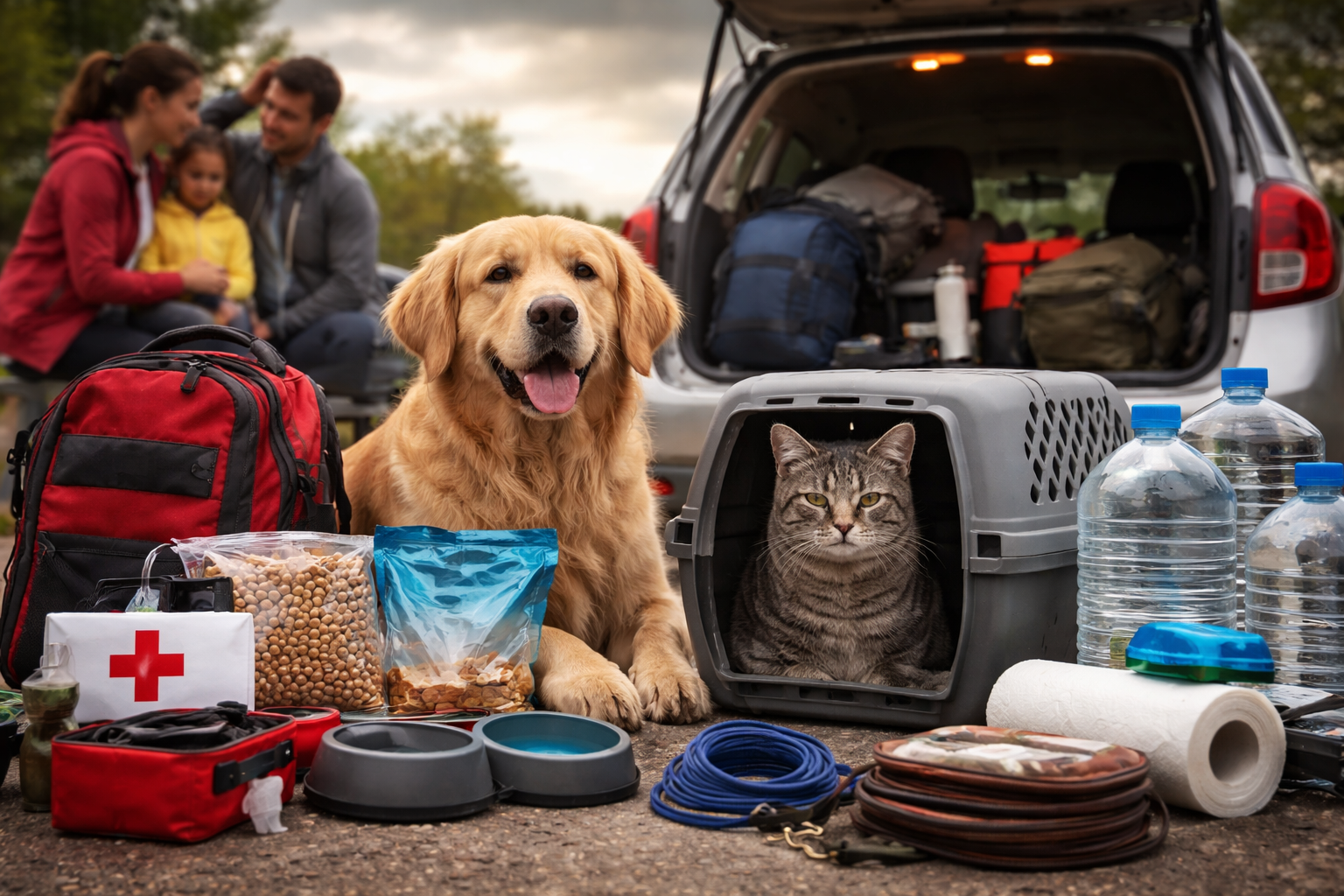
When disaster strikes, your pets depend on you just as much as your family does. Fires, floods, tornadoes, power outages, and evacuations happen fast—and pets are often the first to suffer when people are unprepared. Emergency readiness isn’t complete unless your animals are part of the plan.
According to federal emergency guidance developed with major animal welfare organizations, planning ahead dramatically increases the chances that both you and your pets make it through a crisis safely.
Why Pet Emergency Preparedness Matters
Millions of households include pets, yet many emergency plans overlook them entirely. During disasters, pets can become lost, injured, or abandoned simply because owners didn’t prepare in advance. Shelters may not allow animals, transportation may be limited, and veterinary services may be unavailable.
The reality is simple: what’s best for you in an emergency is usually what’s best for your pets—but only if you plan ahead.
Build a Pet Emergency Supply Kit
Just like a human go-bag, your pet needs a dedicated emergency kit. Experts recommend preparing two kits:
- A full kit for sheltering in place
- A lightweight, portable kit for evacuation
Review these kits regularly to ensure food, water, and medications are fresh.
Essential Items for Your Pet Emergency Kit
Food and Water
- At least three days of pet food, stored in airtight, waterproof containers
- Three days of water per pet, separate from your own supply
Medications and Medical Records
- Extra supply of any regular medications
- Copies of vaccination records and medical history
Pet First Aid Supplies
- Bandages, scissors, antibiotic ointment
- Flea and tick prevention
- Gloves, saline solution, and rubbing alcohol
- A pet first aid reference guide
Identification and Restraint
- Collar with ID tag and rabies tag
- Backup leash or harness
- Copies of registration or adoption documents
Crate or Carrier
- Sturdy, well-ventilated carrier large enough for your pet to stand, turn, and lie down
Sanitation Supplies
- Litter and litter box (if needed)
- Paper towels, plastic bags, disinfectant bleach
- Bleach can also be used for emergency water purification if necessary
Comfort Items
- Favorite toys, treats, or bedding to reduce stress
Proof of Ownership
- A photo of you with your pet
- Written description including breed, age, color, and distinguishing features
All of these items are specifically recommended in federal pet emergency planning guidance.
Plan Ahead for Evacuation or Shelter-in-Place
Emergencies force quick decisions. You must be prepared to either stay put or get out fast, depending on the situation.
If You Must Evacuate
- Take your pets with you whenever possible
- Know in advance which hotels, kennels, or veterinary hospitals accept pets
- Plan alternate housing with friends or family
Public shelters may not allow animals, so planning ahead is critical.
Create a Pet Care Buddy System
- Coordinate with neighbors or relatives who can evacuate or care for your pets if you are unable
- Show them where the emergency kit is stored
- Establish meeting locations both nearby and farther away
Work With Your Veterinarian
Your veterinarian is a key partner in emergency preparedness. Discuss:
- Pet first aid kit contents
- Emergency veterinary hospitals along evacuation routes
- Microchipping and recovery databases
If your pet is microchipped, keeping contact information updated is essential for reunification after a disaster.
Stay Informed and Ready to Adapt
Different regions face different threats—hurricanes, wildfires, winter storms, or earthquakes. Stay informed about local risks and follow official instructions during emergencies.
Preparedness is not a one-time task. Plans should be reviewed, kits updated, and information refreshed regularly. Those who prepare in advance experience less stress, fewer losses, and faster recovery when emergencies occur.
Final Thoughts
Preparing for your pets isn’t optional—it’s responsible survival planning. When disaster hits, you won’t have time to gather supplies or make decisions. The work you do now could save your pet’s life later.
Preparing for your pets makes sense. Get ready now.