
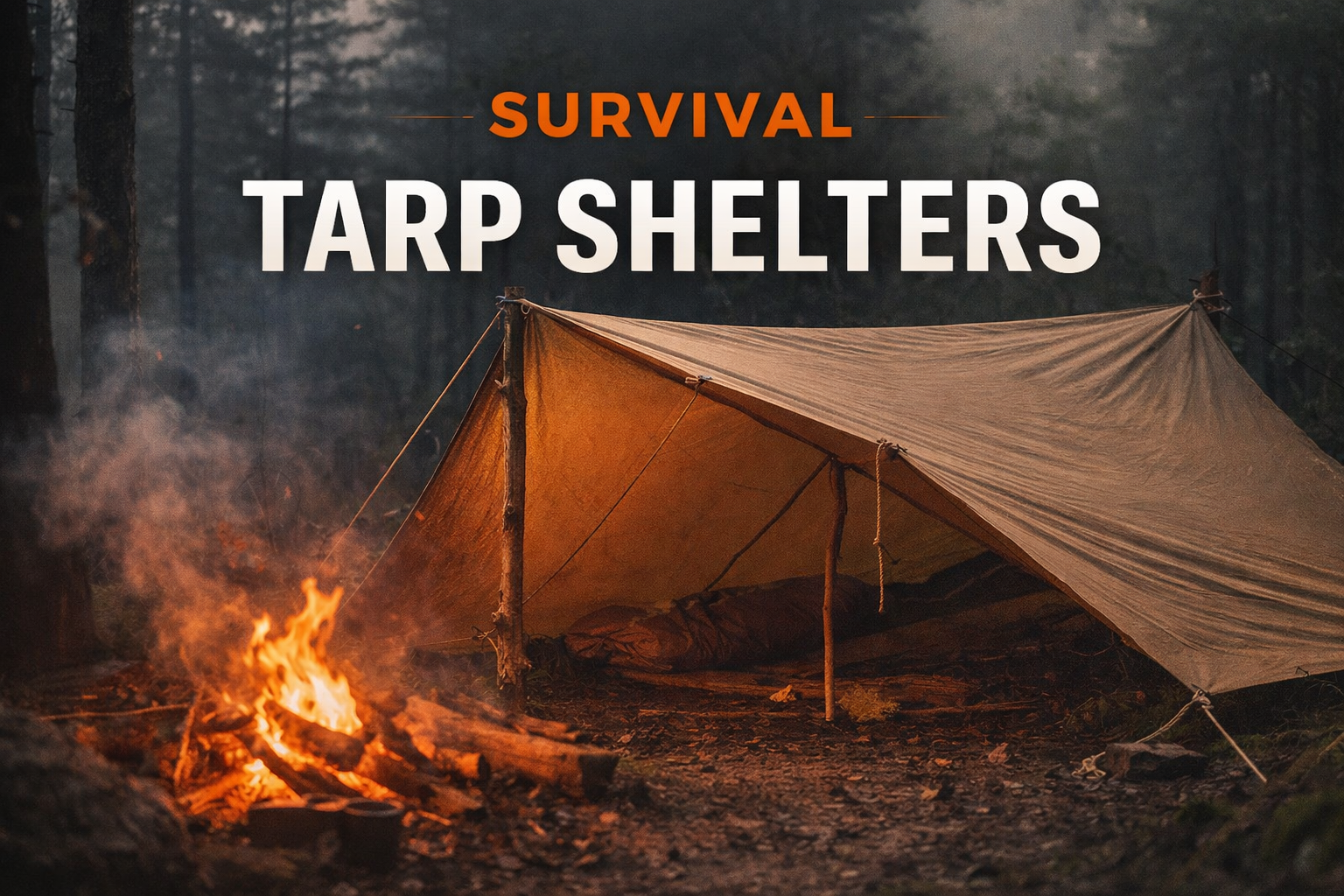
When survival situations strip away comfort, convenience, and certainty, shelter becomes a life-preserving priority. Exposure to wind, rain, snow, or extreme sun can kill faster than hunger or thirst. Among all emergency shelter options, tarp shelters stand out as one of the most versatile, lightweight, and adaptable survival solutions available .
Whether you are bugging out, living off-grid, or caught unexpectedly outdoors, understanding how to deploy a tarp effectively can mean the difference between enduring the elements—or being defeated by them.
Why Tarp Shelters Belong in Every Survival Kit
Tarps offer something rigid shelters cannot: adaptability. A single tarp can be transformed into dozens of shelter configurations depending on terrain, weather, available anchors, and available time. While tarps do not insulate on their own, they excel at blocking wind, shedding precipitation, and creating controlled microclimates when combined with fire, ground insulation, or natural windbreaks.
In true survival scenarios, tarps can also be improvised from unconventional materials such as ponchos, plastic sheeting, emergency blankets, vehicle materials, or scrap fabric—making tarp shelter skills universally relevant even when purpose-built gear is unavailable.
The Foundation: Knots That Keep Shelters Standing
A tarp shelter is only as strong as the knots holding it together. Survival tarp systems rely on two categories of knots:
Anchor knots – secure lines to trees, stakes, or poles Tensioning knots – tighten ridgelines and guy lines to prevent sagging and failure
Without proper tension, tarps flap, tear, and funnel water directly into your shelter. Mastery of a small selection of reliable knots allows shelters to remain stable even in high wind and heavy rain conditions.
Key survival knots include quick-release anchors, load-bearing hitches, and adjustable tensioning systems that allow rapid setup, adjustment, and teardown—essential when daylight, weather, or safety is limited.
Core Tarp Shelter Configurations for Survival
A handful of proven tarp configurations form the backbone of survival shelter systems. These designs can be scaled up or down and modified based on conditions:
A-Frame Shelter
One of the most weather-resistant designs, the A-frame offers strong wind shedding and rain runoff. It can be pitched high for ventilation or low to conserve heat, making it ideal for all seasons.
Lean-To Shelter
Simple and fast to erect, the lean-to excels when paired with a fire reflector. Angle adjustments allow it to block prevailing winds while maximizing warmth.
Diamond and Baker Shelters
These configurations offer excellent coverage with fewer anchor points and work well for hammock setups, cooking areas, or long fire lines in cold environments.
Wedge and Bivy Shelters
Low-profile and efficient, these shelters provide strong protection with minimal materials and are well suited for stealth, high winds, or limited anchor points.
Adirondack and Pole-Supported Shelters
When trees are scarce, free-standing pole designs allow tarps to function in open terrain such as plains, beaches, or snowfields .
Each configuration emphasizes controlling wind direction, managing water runoff, and conserving body heat, which are the true goals of survival shelter—not comfort.
Field Tricks That Solve Real Survival Problems
Real survival situations rarely offer perfect tarps with intact grommets. Practical field techniques overcome common failures:
Stick prusiks allow tarp repositioning without extra cordage Toggle sticks create fast, removable tie-down points Sheet bends and button ties anchor tarps when grommets are torn or missing Drip lines stop rainwater from running down ridgelines into sleeping areas
These techniques transform damaged or improvised materials into functional shelters and dramatically increase reliability during storms .
Shelter Failure Is Not an Option
A poorly built shelter does more than fail—it creates false security. Sagging tarps collect water, funnel wind, and collapse under stress. In cold or wet conditions, this can lead directly to hypothermia.
Survival tarp shelters are not about perfection; they are about function under stress. With minimal gear and proper knowledge, a tarp can provide protection in nearly any environment on Earth.
As long as some form of canopy material exists, shelter is always possible—but only for those who have trained the skill beforehand .
Final Thoughts: Train Before You Need It
Tarp shelter skills are perishable. They require practice, experimentation, and adaptation. Learn these techniques before the emergency—not during it.
In survival, shelter buys you time. Time to think. Time to rest. Time to survive.
Because when things go wrong, it’s not if you’ll need shelter skills—it’s when.