
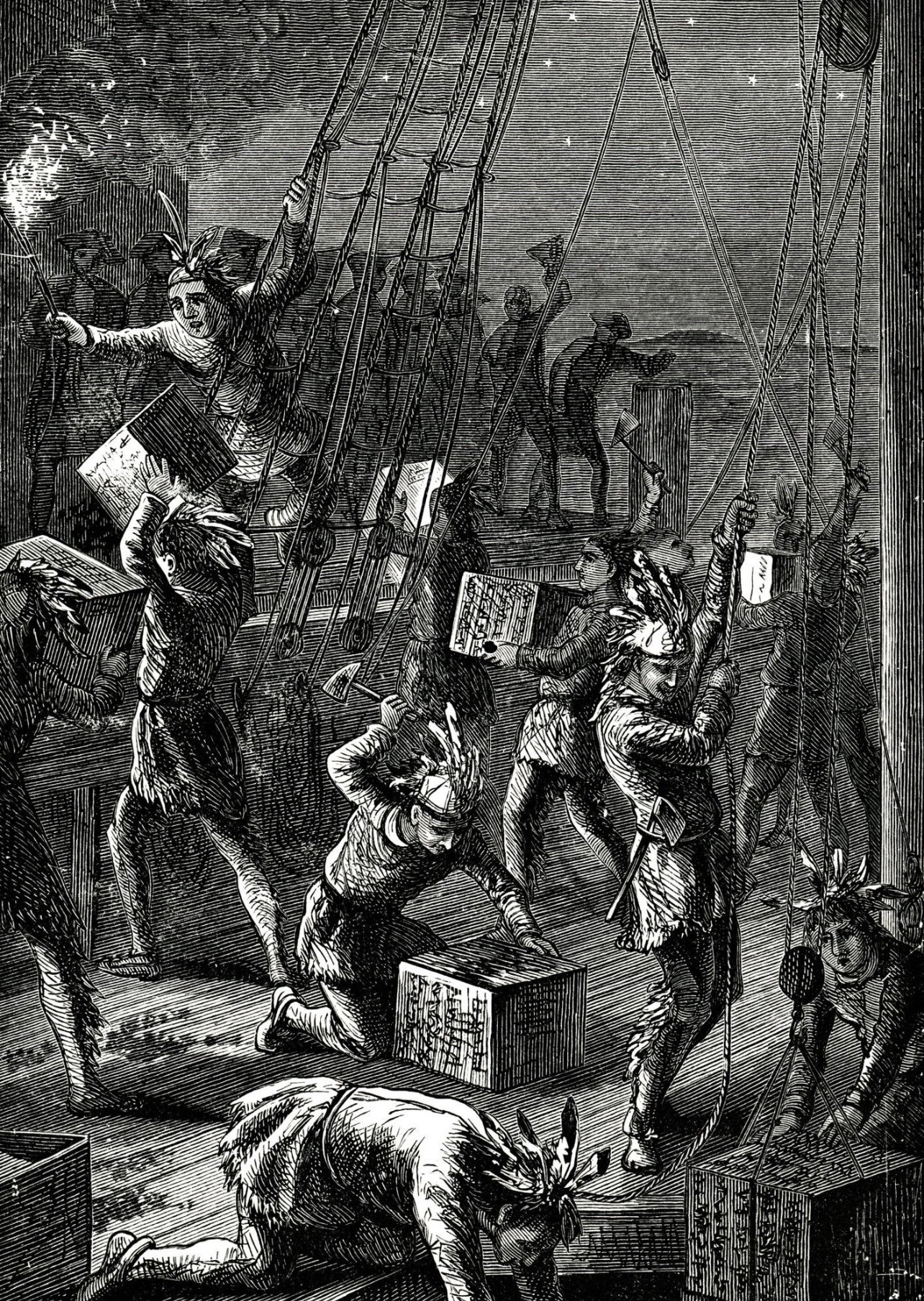
Few events in American history carry the symbolic weight of the Boston Tea Party. It is remembered not merely as an act of vandalism or rebellion, but as a defining moment when protest transformed into open defiance—and when the American Revolution became inevitable.
Often reenacted by schoolchildren and immortalized in paintings and textbooks, the Boston Tea Party has taken on an almost mythical status. Names associated with this era—John Hancock, Paul Revere, and John Adams—have become synonymous with courage and independence. Yet behind the legend lies a very real political crisis that pushed the American colonies to the brink of revolution.
Taxation Without Representation
In the years leading up to the event, tensions between the American colonies and Great Britain had reached a boiling point. Britain imposed taxes on colonial imports despite the fact that colonists had no representation in Parliament. This injustice sparked outrage, crystallized in the now-famous rallying cry: “No Taxation Without Representation.”
The situation worsened when Britain granted favorable tax treatment to the East India Company, allowing it to sell tea at prices that undercut colonial merchants. Many colonial leaders viewed this as a deliberate attempt to weaken the colonial economy while tightening British control through taxation.

December 16, 1773: A Line Is Crossed
On the night of December 16, 1773, the crisis reached its breaking point. British ships—including the HMS Dartmouth, **HMS Beaver HMS Eleanor—sat anchored in Boston Harbor, loaded with tea destined for colonial markets.
That night, a group of colonists—many loosely disguised as Native Americans—boarded the ships and systematically dumped more than 45 tons of tea into the harbor. The operation was disciplined, deliberate, and symbolic. No other cargo was damaged. The message was unmistakable: British economic tyranny would no longer be tolerated.
From Protest to Revolution
The destruction of the tea was more than an act of resistance—it was a declaration. To Britain, it was a humiliating challenge to imperial authority. To the colonies, it was proof that organized defiance was possible.
In response, Britain enacted harsh punitive measures known as the Coercive Acts, further inflaming colonial anger. What had once been political grievance quickly evolved into open hostility. The Boston Tea Party pushed relations beyond mere protest and set the colonies irreversibly on the path toward war and independence.

The Birth of the American Spirit
At the time, many colonists still struggled with the idea of complete independence. Loyalty to the Crown ran deep, and the thought of forming a new nation was daunting. But the men behind the Boston Tea Party demonstrated something new—an unyielding belief that free people should not be ruled by distant kings.
Their actions helped forge what would become known as the American spirit: bold, independent, and unwilling to submit to tyranny. The Boston Tea Party proved that power could reside with the people rather than a monarch, a radical idea that would soon reshape the world.
Why the Boston Tea Party Still Matters
The legacy of the Boston Tea Party reaches far beyond a single night in Boston Harbor. It stands as a timeless reminder that freedom is often secured through courageous, collective action. The liberties Americans enjoy today are a direct result of moments like this—when ordinary people refused to accept unjust rule.
From that night forward, American independence was no longer a distant idea. It was inevitable.